

PODCAST
Into Your Hands
April 3, 2026 | Brandon CooperBrandon Cooper’s Good Friday sermon focuses on Psalm 31:1-8, emphasizing the cross’s significance in addressing sin and stress. He explores how the cross speaks to various personal struggles, such as unfaithfulness, arrogance, and daily stress. Cooper highlights David’s prayer, which Jesus quoted from the cross, to illustrate trust in God amid distress. He explains that David’s trust in God’s covenant promises is mirrored in Jesus’ trust in His Father’s plan. Cooper encourages believers to entrust their lives to God, drawing strength from Jesus’ sacrifice and the assurance of God’s faithfulness and deliverance.
Podcast (cityview-sermons): Play in new window | Download (Duration: 24:48 — 22.7MB) | Embed
Subscribe: Apple Podcasts | Spotify | Android | Email | RSS
TRANSCRIPT_______________________________________________+
The following is an uncorrected transcript generated by a transcription service. Before quoting in print, please check the corresponding audio for accuracy.
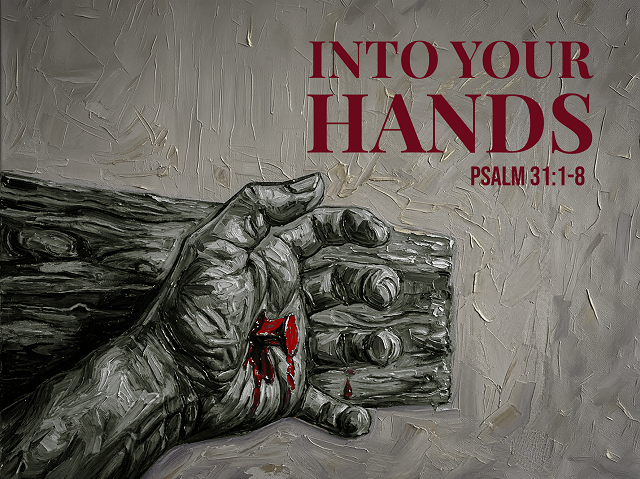
And good evening church, you can go ahead, grab your Bibles, open up to Psalm 31 psalm 31 we’ll be in the first eight verses tonight. It is Good Friday, and of course, the focus of Good Friday is always the cross. That’s why we’ve got the graphic that we have, the reminder of the sacrifice that Christ made on our behalf. Now, if you’ve been to church before, you probably know that the cross speaks to the problem of sin, the fact that Christ had to take the punishment that we deserve, that he gave himself in our place, and for us to make atonement for our sins, that we could be made right with God again, that we could be saved. The Cross speaks to the problem of our sin, but does the cross speak to the problem of our stress. We know that the cross deals with the problem, say, of unfaithfulness in marriage, that somebody who is unfaithful can be washed and forgiven before the Lord. But what about the mess that’s left behind after the unfaithfulness. Does the cross speak to that? We know that the cross speaks to arrogance, envy, backstabbing. It tells us that those are truly evil and deserving of judgment. But does the cross speak to the fact that we still got to show up at 9am on Monday with all those people who are stabbing us in the back? We know that the cross explains the brokenness of the world suffering and death, but can it help us live among the world’s brokenness? And if so, how it’s a pressing issue. I don’t mean to make light of what I’m about to say, but the reality is, we only die and face judgment once. Again. Really important moment cross speaks to that. Like I said, I want to make light of that we only die and face judgment once, but we deal with the stress day in and day out. And there’s a really good chance that you’re in it right now, there’s something in your life where you’re going. This is difficult. This is difficult. I’m not sure how I’m going to get through it. So does the cross speak to that? To get our answer, we’re going to look to a prayer of David, which is interesting, because, of course, David prayed long before the cross, about 1000 years or so, and yet it leads us to the cross his prayer, in part because Jesus quotes his prayer while on the cross. One of the seven words that Jesus speaks from the cross, Jesus was not the only one to quote it. In fact, it’s often quoted. Jonah quoted it in his prayer when he was in the belly of a fish, Jeremiah had it on his lips throughout his ministry Jesus, as we saw even David, potentially in a later psalm, Psalm 71 seems to quote it again. So the fact that so many people borrow from this psalm just tells us that it speaks to a wide range of issues and a wide range of life circumstances, which means it speaks to you today, tonight, wherever you are, to help you see why and how you can trust God in every distress. We do things a little differently than we sometimes do. We’re going to take three passes through the psalm. I’m gonna read it in just a moment. We’re gonna look at it first through the eyes of David, then through the eyes of Jesus, and finally, through your eyes as well. So let me read for us Psalm 31 verses one to eight, for the Director of Music, a Psalm of David. In you, Lord, I have taken refuge. Let me never be put to shame, deliver me in your righteousness, turn your ear to me, come quickly to my rescue. Be my rock of refuge, a strong fortress to save me. Since you are my rock and my fortress, for the sake of your name, lead and guide me. Keep me free from the trap that is set for me. For you are my refuge, into your hands. I commit my spirit, deliver me Lord, my faithful God. I hate those who cling to worthless idols, as for me, I trust in the Lord. I will be glad and rejoice in your love for you saw my affliction and knew the anguish of my soul. You have not given me into the hands of the enemy, but have set my feet in a spacious place. So David, first of all, now we don’t know his distress Exactly. There’s no indication in the superscription just what the circumstances are, but we know enough of his story to guess, especially. Especially in light of the preponderance of rock and crag imagery. You know, we’re probably dealing with David when he’s hiding in the wilderness, either from Absalom or, even more likely, from Saul. He’s there hiding as Saul is trying to kill him, which means, as we see right there in verse one, he needs deliverance. Verse two, he needs somebody to rescue him because verse four, a trap has been set for him. He is in distress. In other words, things are not going well. You can actually picture him as he’s praying this psalm. Picture him hiding in the mountains. The enemy is closing in, surrounding him, and so he finds a cleft in the rock, finds a little crawls into some crevice, hidden and safe, so that his enemies don’t find him. And that’s then how he comes to think of God, which is why he prays as he does. He’s thinking, I’m here, I’m hidden. I’m protected in the rock that’s my God. God is the crag in which I find safety, the rock on which I stand solid ground when everything else seems to be falling apart around me, God is his only place of refuge, but more than a refuge, even as he says, a fortress defending him from his enemies. So he’s thinking all this, it’s no surprise. Then he cries out to God, especially as he comes to God as a member of God’s covenant people trusting in God’s covenant promises. That’s how he speaks of God, like he knows that God has bound himself to the people of Israel, like a husband taking on his wife’s debts when they get married. God binds himself to his people, binds himself to David then And so David prays, deliver me in your righteousness, in your promises, in your covenant promises, because you are who you are, because You committed yourself to your people deliver me. That’s why he also prays, let me not be put to shame, which is a phrase we probably get wrong in our first reading, because we hear that and we think, let me, you know, not feel ashamed. I don’t want to feel embarrassed because I messed up and I got myself into this whole pickle. But the phrase literally reads, let me not reap shame. We know how reaping works. You reap what you sow. So what did David sow that he’s worried he would reap shame. He sowed hope so like I put my hope in the Lord, let me not reap shame. Let me not be disappointed. Don’t let my hope in you be disappointed. Lord, of course, how could it? Because God is who He always is, and that’s why David grounds all of his requests in God’s character. That’s the solid rock on which he stands. He doesn’t expect God to help him because he’s persuasive, no, but because God is righteous, again, faithful to his covenant, just. He doesn’t expect God to help him because he’s innocent, which is really good news for us if we’re going to pray this prayer, also, since we are not innocent before the Lord, No, he doesn’t expect God to help him because he’s innocent, but because he’s been redeemed, because God is his Redeemer. It’s actually there in verse five when it says, deliver me, Lord. The word that’s used is the word that’s often translated ransom, like ransom me, Lord, pay the price to secure my release. We often call that redemption. That’s why he trusts only in God. There in verse six, not in idols. Again, he’s part of God’s covenant people, so he’s going to trust His covenant Lord. He’s not going to go making treaties with other gods. And he hates vain idols, where there’s literally emptiness. I hate empty things. There’s nothing there, not really. There’s a really dumb place to put your trust, of course, in nothingness. So that hard. Verse six, it’s hard for us to read. I understand that, but it’s really it’s stating his trust in God alone, and his integrity, his commitment to God’s covenant, because he trusts in God, because he needs God to deliver him. And he knows that the glory will be God’s and not his. I’m not getting myself out of this predicament. So when God comes and rescues me, it means he will be glorified. And so he prays for the sake of God’s name that he would be glorified in the redemption. And that grounds his prayer too. That’s why he trusts God as he does, for it would dishonor God if he didn’t deliver those who trust in him. I love the way Charles Spurgeon made that point reflecting on this Psalm he writes this, the Psalmist has one refuge and the best one at that, though other things may be doubtful, David lays down most positively the fact that he relies upon the Lord, and he begins with it lest under stress of trial, he should afterwards Forget it. He dwells upon it as a comfort to himself and a plea with God. And here’s the key question, then, how can the Lord permit the man who depends alone upon him to be ultimately put to shame. This would not be dealing like a God of truth and grace. It would bring dishonor upon God himself if faith were not in the end, rewarded. And that’s David’s prayer in a nutshell, right there. In fact, he’s so confident then that God will hear his prayer. He expresses his assurance in verses seven and eight, and he does so in the perfect tense, even past tense, like I’m going to be glad and rejoice, because, look, you basically already done this. It’s as good as done because you saw my affliction and you knew my anguish. So why is David so confident that the Lord is going to hear his prayer? He’s borrowing words from earlier in the Old Testament. He’s going, I’m confident the Lord is going to do this because I know that the Lord has already done this exodus, three, seven and eight. God says to Moses, I have surely seen the affliction of my people who are in Egypt and have heard their cry, because they’re task masters. I know they’re suffering, right? He sees, he knows, and so he came to rescue Israel out of Egypt. He will come to rescue David as well. What God’s done before. He’ll do again, because our God is who He always is. So like Israel in Egypt, David is expecting to be delivered from his enemies and to have his feet planted in a spacious place. That spacious place was the promised land for Israel coming out of Egypt. But you can imagine what David’s thinking, and we can picture him kind of like hanging off the side of a cliff or something, or he’s tucked in a little rock all curled up and stuff like that. He’s just thinking he’ll be good put my feet on solid ground, and you know, I got room to maneuver at last, all this because God loves him, because God loves us, that’s the covenant love. I will be glad and rejoice in your love, your commitment to your people. David commits his life to God’s loving and capable hands. And sure enough, you know how the story goes if you’ve read your Bible, God delivered him from Saul, just like he delivered him from Goliath earlier, just like he’ll deliver him from the Philistines, the Amalekites and Absalom and on and on and on in all circumstances. So that’s David. What does that have to do with Good Friday? Though, we’re not at the Cross yet, so let’s take another pass through the psalm, but this time through the eyes of Jesus. I mean, put yourself there for a moment, at the base of golgotha’s Hill, that fateful Friday afternoon, 19 193 years ago, you see Jesus bloody gasping for breath. He hangs upon the cursed tree while onlookers sneer and mock. We know what they said. We read it in Luke 23 He saved others. Let Him save Himself, if he is God’s Messiah, the chosen one. And then just a few verses later, we see how the story ends. It was now about noon, and darkness came over the whole land until three in the afternoon, for the sun stopped shining and the curtain of the temple was torn into Jesus called out with a loud voice, Father, into your hands. I commit my spirit. When he had said this, He breathed His last. We want to zero in on that quote, of course, because Jesus quotes Psalm 31 he quotes David’s words in verse five. And why shouldn’t he? And he is in unequaled distress. He’s not hiding in a crag, but crucified on the summit. It having been handed over to his enemies, already having fallen into their trap. And so we’re asking what the onlookers were asking sneeringly, will God deliver? That’s the question the unruly mob asked. He delivered others. Jesus. So if he’s really the Christ, if he’s really the one he claimed to be, then let God deliver him. And surely God could, Surely God would. Jesus could call and his father would send legions of angels, as Jesus had told his disciples just the night before, as he prayed in Gethsemane, after all, Jesus took refuge in his father. Certainly didn’t cling to worthless idols. He trusted in the Lord like no other Won’t God keep him from shame? Won’t God deliver him in righteous justice, which the cross certainly isn’t Jesus, the only truly innocent sufferer the world’s ever known, hanging there for a crime he did not commit. But no, God won’t, because Jesus didn’t ask him to, because that wasn’t the unified purpose of our Triune God. Jesus came to die, and you can see it right there in Luke, because Jesus prays verse five A, but not 5b into your hands, I commit my spirit and then silence. It says, If Jesus says and leave me undelivered. Don’t rescue me because I’ve come to rescue them. But he doesn’t pray, deliver me, Lord My faithful God, not because he’s worried God isn’t faithful, but quite the opposite. In fact, this is the truest expression of God’s faithfulness. Jesus hanging on that tree. He doesn’t call our faithful God into question, but proves him, because here he is faithful to every promise he’s ever made, coming to rescue us. Because God saw our affliction, knew our anguish. He came to pay the price, to ransom us, to rescue us. That’s the whole reason we have a Good Friday and Jesus came to deliver us, not from enemies like Saul or Goliath, which are bad, but our truest enemies, sin and death and the powers of darkness, which are far, far worse, and he really did deliver us. We know it. We saw it there in Luke as well, because the curtain was torn in two. The sacrifice of Christ was accepted by his father so that all who come in Christ can come right into the most holy place to approach God’s throne of grace with boldness to receive mercy in our time of need, Jesus couldn’t deliver himself and also deliver us. So he hands himself over to his enemies for our sakes, whereas David sought and received deliverance from death, Jesus borrowed David’s words as he died. He didn’t expect or want deliverance from death, but rather through death, his and ours, which will be given in the resurrection, His and ours, like David, Jesus trusted his father, but he entrusted himself to God in death in order to deliver us from death. So let’s think for a moment what that does for us in our moments of distress as we take our next pass through the Psalm the last section. What does this psalm have to do with you? In light of the cross, I won’t pretend that your distress isn’t real. The reality is the distress you’re facing right now could be worse even than David’s, you could have a child in a harm’s way. Maybe you’re experiencing chronic pain through the years, terminal illness, whatever it might be. How do we draw on this Psalm and Jesus’s use of it to strengthen our faith so that we can press on in hope? Here’s how simply put, because Jesus did what he did, we can do what David did because Jesus did what he did, we can do what David did, only more so so much more so again, David trusted God to deliver him from death, but Jesus trusted his father to deliver him and us through death, which means the final enemy has already been defeated on that cross where Jesus hung. What more do we have to fear? Nothing, nothing, even if the worst comes to pass, we know that God will deliver us through it, through death, into forever, resurrection life. We have every reason to trust God, because God has proved himself. I mean, he’d already proved himself to David again. That’s the Exodus. But how much more So has he proved himself to us? I mean, again, look at the words David uses to describe God. Aren’t they truer for us, we have even more confidence. Is God faithful? He’s so lovingly committed to his people that he’s willing to send His Son to die in our place for us? Is our God righteous? He’s so righteous, he’s so just that he punished every sin while being so loyal, so faithful to the covenant that he punished it in Christ instead of in us. Is he able? Is he powerful enough to deliver us to set our feet in spacious places? We’ll just look on Jesus reigning now in glory, which is a pretty spacious place, alive forever. Could he be our rock of refuge? Absolutely, we can hide ourselves in Christ, that Rock of Ages cleft for us, safe forever in every circumstance, because God is who He always is. He always acts in line with his character. Our hope will never be disappointed. If our hope is in Christ, if our hope comes from looking to David, sure, but looking especially to David’s son and Lord Jesus our Savior, so why not commit your spirit, your whole life, into his open and loving and strong hands. That’s your takeaway tonight. Quite simple right from here. Entrust your life into his hands. Entrust your life into his hands. He will lead and guide you in your distress. He will deliver you, either from or through whatever you are facing, because he has already delivered you in Christ, and in the end, by the blood of Christ spilled to pay that ransom, he will redeem you from your sins and set your feet in glory. Are you being attacked? Slandered? Mistreated, abused, yeah, Jesus was too. He can entrust your life into his hands. He knows what it’s like. Are you weak, thirsty, alone, weary, yeah. Jesus was too, and he still trusted his father and his father sustained him. You can entrust your life into his hands. Are you struggling with doubt? Can’t see what God is doing in these circumstances. Jesus struggled too. That’s Gethsemane. He was struggling so much he’s sweating blood, and yet we know what God was doing. And of course, Jesus did too, and trust your life and his hands. Are you losing the battle against sin, weighed down by shame and guilt? Jesus defeated it. He destroyed it when he died. And trust your life into his hands. Are you facing death yours or another’s? Jesus did too, and he faced death for you didn’t trust your life into his hands. When circumstances change for the worse, remember the one who never changes, who always is, who he always is, and entrust your life into his hands. Let’s pray to him now.