

PODCAST
From Humbling to Stumbling
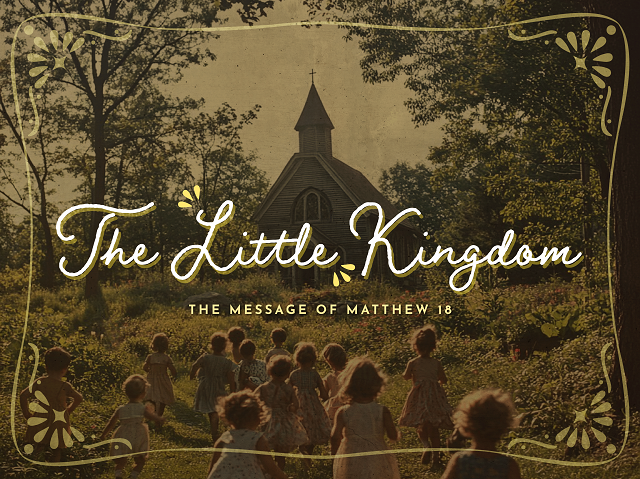
August 16, 2026 | Brandon CooperBrandon Cooper discusses the importance of avoiding stumbling blocks in the church, referencing Matthew 18:5-9. He uses the analogy of a college friend face-planting on a scooter to illustrate how easily one can stumble. Cooper emphasizes the need to welcome new believers and avoid causing them to stumble, likening it to Jesus welcoming children. He explains the concept of “stumbling block” as a scandal that could lead to apostasy. Cooper urges the congregation to be proactive in welcoming vulnerable Christians, to avoid causing others to stumble, and to cut out sin from their lives, highlighting the seriousness of sin and the need for radical action to avoid eternal punishment.
Podcast (cityview-sermons): Play in new window | Download (Duration: 47:04 — 43.1MB) | Embed
Subscribe: Apple Podcasts | Spotify | Android | Email | RSS
TRANSCRIPT_______________________________________________+
The following is an uncorrected transcript generated by a transcription service. Before quoting in print, please check the corresponding audio for accuracy.
Good morning, church. Go ahead, grab your Bibles. Open up to Matthew 18. Matthew 18. As we continue in our series, we’ll be starting in verse five. So, as you’re turning to Matthew 18 five, I had a buddy in college. This was some years ago now. This was back when the I think they’re called razor scooters had like just come out. They were the hot new thing, especially on a college campus because you kind of fold them up and you know carry them with you and whatnot. So my buddy was there, and there was a large pack of girls right near him. He was a ladies’ man at the time, and so he thought he would kind of you know swing in nice and cool, and he hit something pebble whatever crack in the sidewalk and face planted. So this was rough, especially early on in his college career as a freshman and whatnot. And so he kind of you know picked himself up, dusted himself off, and decided to scoot away somewhat quickly, except that he hit something, and so he face planted again right in front of the same group, and that was that. I think he transferred colleges at that point, which you would have to. I share this story because, of course, it doesn’t take much to face plant when you’re in something on something like a scooter, rollerblades, whatever. You know, it’s a crack in the sidewalk, it’s a pebble, whatever, and you can just go right over. Of course, some of us have learned the hard way. It happens when you’re walking sometimes too. You know, sidewalks uneven as you’re walking and talking, and boom, you’re just on your face. Sadly, this is true for us spiritually as well. There are lots of ways for us to stumble and lots of stumbling blocks on the sidewalk that we are walking down, and that’s where Jesus takes us next here in Matthew 18. Remember, we’re in chapter 18 because it’s a very tight chapter talking about life in the kingdom community, and last week we talked about the need to humble ourselves to change and become like children in order to enter the kingdom. But here Jesus moves us from humbling to stumbling, from being like a child to well, honestly, kind of what happens when you’re a child. If you had kids, you know when they’re first learning to walk, they face plant a lot, they fall down a lot. We had at least one kid who just kind of had a bump from like ages one to four or so, just never went away. We weren’t sure it ever was going to. I think it mostly has. So sure, kids are going to fall down, and that’s what it’ll look like for us in the kingdom. But the one thing you don’t do as parents and as friends and older siblings, the last one maybe, is knock them over. You’re learning to walk. You don’t keep pushing them over. Anything like that. That’s the point. Like that’s where Jesus is taking us here. We don’t want to be the reason that any of Jesus’s kids fall down. We don’t want to be a stumbling block to them, or to throw a stumbling block in front of them. It matters greatly to Jesus how we treat His people, and so what’s going to happen is this week in this passage He’s going to deal with our actions towards these little ones, and then next week we’ll see that he’s going to deal with our attitude towards the little ones. Now, the word stumbling block is is the key phrase for us in this passage. It’s literally the word scandal in in Greek, and then we get our word scandal from it. Of course, scandals taken on a slightly different meaning at this point. But you understand when there’s a scandal in the church, it might cause people to walk away from the faith. So they’re still related, but so that this word stumbling block-it’s translated different ways and usually with an awkward phrase-it shows up six times in the Greek in these five verses. So it’s this key concept that holds it all together, and so we want it to be the key concept for us as well, so it’s right there in our big idea. You can see on the screen in your bulletin as well.
Take stumbling seriously in the church. Take stumbling seriously in the church. It is a big deal, the possibility of a stumbling block. So be aware, be Proactive, be zealous even for the health and the walk of those around you. There are three ways that we can take stumbling seriously in the church. We’ll take them each at a time. So the first one from verses five and six. Let me read it for us, and we’ll figure out what that fill in the blank is. So Matthew 18 verses 5 and 6, and whoever welcomes one such child in my name welcomes me. If anyone causes one of these little ones, those who believe in me, to stumble, it would be better for them to have a large millstone hung around their neck and to be drowned in the depths of the sea. Now a word on the structure, because some of you are looking at this, especially if you’re looking in our pew Bible, and you’re going, okay, verse five goes with the last paragraph, not with this paragraph. How come we didn’t do it last week? And I could have because it’s there and it makes sense with the last paragraph also. Remember when this was all written, there were no headings and things like that. So this is just a seamless transition. Verse five. It does relate to what came before it. It also relates to what comes after. Also, really tightly with verse six, in fact, because verses five and six together form. This is what Jake was talking about, by the way, an antithetical parallelism. Good. Move on now that you know what that is. Antithetical, so the opposite, right? But parallelism. So the Hebrews loved to speak in parallel sentences, parallel grammatical structures. But an antithetical parallelism means the first part and the second part are opposites. I thought I need to illustrate this because this is a complicated concept. I get that, and so I’m going to go to Proverbs because Proverbs is full of parallelism and antithetical parallelism. I thought I’m not going to look at the prolog, chapters one to nine, so I’ll start in chapter 10 and I’ll just read until I come to the first antithetical parallelism. Proverbs 10 verse one, it’s everywhere. Okay, here’s Proverbs 10 one: A wise son brings joy to his father, but a foolish son brings grief to his mother. It’s parallel. You’ve got a son bringing something to a parent. Totally parallel. It’s also the opposite. That’s why it starts with the word “but, right? So you got a wise son, but a foolish son, bringing joy but bringing grief. The mom or dad doesn’t really matter which. There, that’s what we have in verses five and six. So I threw it up on the the screen for you again here, just so you can see the parallelism in a in an annoyingly literal translation. Whoever welcomes a child like this in my name, etc. But whoever scandalizes one of these little ones who believe in me. So whoever, whoever does something, does something, and then child, little one, same difference, right? And then we actually get something about Jesus in each case too. In my name, who believes in me? But they just say opposite things. The opposite, there, of course, is welcomes, scandalizes. That’s the big difference. What do we learn? Why does this matter? Because I’m looking at your faces, and you’re thinking you got about 10 seconds to make this more interesting, or I’m pulling out my phone and looking up fantasy football articles. We learn three things from all of that. First of all, we learn what exactly the little ones are, and this is really important. So we were talking about children last week, but not literal children. It was saying all of us. We all need to change and become like children. Now we know that when Jesus uses the phrase little ones. He’s talking about that same idea. Those who are childlike in the faith, because they’re set in parallel. There, he’s just talking about believers. So, anytime you come across little ones or one of the least of these in Scripture, you’re talking about disciples, Christians of Jesus Christ, maybe particularly vulnerable disciples, those who are newer to the faith, having a harder time walking still, who are weak or marginalized in some other way.
Second, we learn, and this is important, that little ones, disciples, Jesus’s kids, can stumble, and that’s important. I actually wonder if Peter and the other disciples thought back to this moment, just you know, a short while later when Peter stumbles and denies Christ three times. When the rest of the disciples, the exception of John, scatter. You know, run away. Don’t even stay there by the cross as Jesus is being killed for them. And so, this good reminder, like, okay, it’s serious. It’s very serious. The word “stumbling” actually has the idea of like falling away from the faith entirely. Like that’s that’s a possible outcome. So it’s this really serious thing. But it would be good to know, like, okay, this is a possibility. We need to be aware of it. But then, third thing we learn from looking at this is because there is this antithesis. Remember, we talked about like why sun brings joy, fool sun brings grief. Okay, whoever welcomes, whoever causes to stumble, those got to be opposites. So we have a very narrow focus here on one particular type of stumbling. We could almost translate the idea as whoever welcomes one of these, whoever rejects, whoever doesn’t welcome one of these. So we get a kind of a new thought, right? Last week, become like a little child, but here in verse five. Welcome those who have become like little children. It is not easy to become a Christian. Certainly not in this context where you didn’t have generational families of faith. Some of you know what that’s like. That’s my story as well. I’ve not come from a believing family, and so there was a certain moment where I broke with my upbringing, and it led to my great relationship with my family. But it led to some conflict certainly early on. It’s even harder in other parts of the world. For example, I was just hearing from one of our missionaries who serves in North Africa just this week, talking about how converts there in a heavily Muslim area feel so lonely and so endangered that mostly they’ll flee the country. They’ll actually try and go somewhere else where there is freedom of religion because it costs to become a Christian. Like you lose your family, you can get booted out. Your family could try to kill you in certain parts of the world, and so that’s the vulnerability that some people have when they become a Christian. They’re like bruised reeds or smoldering wicks. Like it doesn’t take much to end them, to end their faith, and so Jesus says, “Welcome them, welcome them into the family of God. Welcome them as if you were welcoming Jesus Himself. That’s what means to welcome them in His name. Like how we treat disciples, how we treat God’s people is a test of how we treat Jesus Himself. Of course, it is because it’s a test of our gospel understanding. If you think about it, I mean, God welcomed you into His family, and at great cost, the blood of His Son. When we remember that, that that that love compels us to do likewise for others to welcome them into His family, into our family as well. So you see somebody coming into this room, into this place, into this community who is new, confused, immature in the faith, perhaps questioning, weak, whatever it may be, we welcome, we go, we grab, right? Invite them to to sit with you on a Sunday morning. Invite them to join your community group. Do more than that. Actually, when when Jesus says welcome here, he’s in an ancient Near Eastern context that meant have them into your home, have a meal with them. That’s not how we think of welcoming today in 21st century America. We think handshake and a bulletin. That’s all it takes to be on the connection team. That’s not good enough. We need to recover something in the ancient Near Eastern approach to hospitality. Like yes, whoa, you are part of my family now. Absolutely, you come into my home as well because what is the alternative? The alternative is not welcoming. That might be active rejection. It might just be a passive indifference, which means there’s no real love for the people of God. Now, how? Think about this for a moment. How could that cause a disciple of Christ to stumble?
You can easily picture it. You may well have lived it. I know I did early on, seen it in other places as well. You’re a young Christian sitting in a high school class, college class, something like that, and getting mocked and belittled for your faith. And think about what that does to somebody who’s going. I’m new to this. I came to Christ after my freshman year of high school. I remember being in some classes later on and standing up for the faith. I was outspoken then. Should try to picture it, right? And so, getting attacked, kind of from all sides, and I remember looking around and going, “Some of y’all are church kids. Like I know you grew up in this. How come you’re keeping silent and hanging me out to dry right now? That’s what means to reject a little one. Passive indifference in that case, but you you can imagine how that could go so easily, for somebody sitting in a room like that, thinking, you know what, it’s going to be so much easier to give up, to fit in instead of being the sort of person that the world can’t ignore any longer, and you can just watch Satan snatch that seed away. Like we would expect that from the world, but we should find better in the church, and so we should be proactively welcoming His children. So that’s the first way we take stumbling seriously in the church: is reach out, reach. Out, take the initiative. In other words, go get them, welcome them. Don’t wait for them to say, “Hey, I’m new here. Could you help me out? Like you go find them. Reach out. Now, one of the challenges in our text this morning is that it’s a little bit unclear. It’s ambiguous throughout. Is Jesus speaking to his disciples here? That is the context. You see that back in 18 one, or is he speaking more broadly to and about the world? And I think the answer is both. We’ll see that in the next section, especially. But the reality is, the world’s going to world, but we should be different. We should be careful and heed this warning, and in part because the warning is so serious. I mean, look at what Jesus says there in verse six. He says you might as well take a millstone. Now, a millstone-the word that’s used here-this is not the one you hold in your hand to grind grain, kind of like a mortar and pestle today. It’s not that one. This is the millstone that’s so big they’d hook a little contraption up to it, and then hook a donkey up to the contraption. The donkey would walk around in circles in order to spin the stone so that it would mill the grain. So this is a big rock we’re talking about. It’s one so big you need a donkey to move it. Tie that rock around your neck, jump off a fishing boat into the middle of the ocean, like the original concrete shoes. How’s your story going to go? You’re going to sink fast, and you are not coming back. It’s an intense image. It’s a graphic image. Amy and the girls that were reading this passage this morning, or throughout the week at their morning time, going through the little bookmark you know thingy that we got, and so they’re reading it. And Callum, my five-year-old, at one point goes, “This is the deathiest passage in the Bible. He’s not wrong because we got this, and then we’re going to get to some more. And eight and nine-I don’t know if it’s the deathiest-but he’s five. He hasn’t read it all just yet. But this is an intense passage. Like Jesus is not messing around here. The graphic image helps make the point. Like you can’t miss the point to cause a little one to stumble, to willfully cause a little one to stumble, so that they’re in danger of leaving the faith is so bad that it would be better for you to die before you do it. Like better to just your life’s over; it’s ended before you had the opportunity to do that because of the eternal ramifications of your bad choice. Safe to say, Jesus takes stumbling seriously in the church.
Every time I read this passage, I think when I was a young believer, still I knew this passage though at least I knew the gospel’s okay. I’ve been a Christian for about three years at this point. It was actually this time of year exactly. We had our senior breakfast at the church where I grew up, which was not a good church. They did not preach the word of God. And in this church, the youth director got up and gave this little talk at our senior breakfast or whatever, and gave all the tips that we gave to Caris this weekend. You know, like here are some things to think about when you go off to college. And the last thing she said to this group of young people, “I was the only believer in that room. The last thing she said was, “And if anyone comes up to you and says, ‘Are you saved? Just say, ‘Yep. And even at that moment, having been a Christian for 20 minutes or so, I thought it would be better for you to have a millstone tied around your neck and get tossed into the ocean than to do what you just did. You may well have just damned these kids, because now when somebody loves them enough to share the gospel with them, they’re going to go, “Oh, I know I’m supposed to just say yes and move on with my day. You’ve hardened their heart to the only message that can save. Jesus was right. Take stumbling seriously. Reach out, guard the little ones. Reach out and welcome them to steady, vulnerable Christians. And so, like even right now, just think: Is there an invitation you need to make today, and what’s stopping you from making it? Second way that we take stumbling seriously in the church, verse seven. Let me read it for us. Woe to the world because of the things that cause people to stumble. Such things must come, but woe to the person through whom they come. So Jesus here offers a prophetic woe. A woe sometimes sounds a note of lament. That’s not what’s happening here. It is a note of warning. It’s a note of judgment, although the lament is there. Like this is sad wrath that Jesus. Is offering it is love that motivates this word of condemnation. It is love for the little ones who are going to stumble, but it is also love for those who cause them to stumble. Warning is always an act of love. Like parents know this, it’s why we warn our kids. Going, don’t don’t do this, don’t do this. Like it’s not going to go well for you. I love you too much to just let you go into it. Don’t do what will harm you. Turn and change. Jesus is speaking to the world here. The world in the Gospels, in particular, is the place of rebellion against God. I mean, this is the place that persecutes His people. But then you also think God so loved the world that He gave His one and only Son, that whosoever believes in Him shall not perish but shall have eternal life. And so this is that act of love for the world that is causing his children to stumble. Warning is always an invitation; it doesn’t have to go down like this. So even now, Jesus is pleading with you in turn to do something different, and you think, how how do I know that he’s pleading with me? Because you just heard this word right here in this room. That’s how I know he’s pleading with you. Now Jesus says it is necessary that these stumbling blocks come. There is an inevitability about it in God’s sovereign purposes. Why? Well, in part because God created us in such a way that we are free to do what we want to do, and since we are in rebellion against God and against His good commands, that means we are free to do what we want to do, and we often want to inflict hurt on others. Not always intentionally, but more frequently than any of us would care to admit. So that’s why it’s inevitable that these will come. But that’s that’s not the focus here. It’s really just a casual aside on the road to a larger point that Jesus is making.
The fact that it’s necessary that these things happen doesn’t absolve anyone of responsibility. The fact that this happens in God’s sovereignty doesn’t mean that you’re not still responsible when you cause somebody to stumble. Like yes, absolutely, God will use persecution to mature His people, and to spread the gospel. That doesn’t mean the persecutor isn’t still judged, unless they repent and receive forgiveness in Christ. So it’s time for self-examination, and when we read this verse, are you, whether you claim to be a Christian or not, are you causing God’s people to stumble? What might that look like? Might look like temptation, of course. You know, I had friends in college. Again, I was still a young believer. I had friends in college who were constantly being like, “Come get drunk with us, you know, come try and hook up with some girl. That temptation was there. You might have experienced something similar. Or at work, I mean, you may go tomorrow and have someone, maybe even somebody who’s over you at your company, saying, “Go ahead and cut some corners here. Or even just you don’t need to cut corners, but just you know, keep bringing in the bacon, right? Make more money, more money, and live it up, and leading you into materialism and self-indulgence. Maybe it is the mocking that we talked about earlier. Hopefully, that’s not true of most of us in this room, though. I don’t think we’re actively tempting our brothers and sisters in Christ to sin. So maybe it’s just an insensitivity to weak and immature faith, and Paul picks up this point, quotes from Jesus’s words. It would seem here’s Romans 14 verse 13. Instead, make up your mind not to put any stumbling block or obstacle in the way of a brother or sister. It can happen all sorts of ways. Again, sometimes even unintentionally, because we’re not careful enough. I remember a story when I was down on the mission field, and there was a group of missionary teachers who were living in an apartment. There were four of them, and they’d had a party the night before. There was alcohol at the party. That’s fine, but it meant that the trash can was filled then with some beer bottles or whatever. Well, the next morning, when the maid came in, because he had maids in Colombia, that’s kind of how that went. She was a very young believer, and so she looked in the trash can and she thought there are four guys and 16 beer bottles, and it messed with her faith. Again, it wasn’t intentional. These people didn’t get drunk, they didn’t get tipsy, anything like that. They’d had a big party, but it meant. With her, and so there’s that insensitivity. Maybe it’s you know you got somebody over and you just pop on a movie with some questionable content, and you think, wow, there’s no nudity, it’s fine, or something like that. But there’s suggestive scenes to somebody who struggles with this, and they stumble as a result. And so the second way we take stumbling seriously in the church is watch out, watch out! Now that’s a little ambiguous, intentionally ambiguous, because I think there are two ways for us, two ways we must apply verse seven to ourselves. First one: Watch out that you are not causing anyone to stumble. Watch out that you’re not one of those ones who gets the woe pronounced on you. You don’t want to be responsible for causing someone to be someone to stumble. So so be careful, be loving. And I mention this because, of course, we know that this happens in the church. We do cause people to stumble, even in the church. And so, can I speak for a moment to those of you who are questioning Christianity, or maybe aren’t even questioning Christianity? You’re done with Christianity. Maybe you’re here because mom and dad bring you every week, and as long as you’re under their roof, you show up on Sundays. But you are so done, especially with God’s people, the church, because you’ve seen this, you’ve seen hypocrisy, you’ve seen judgmentalism and arrogance. First thing I want to say to you is just I’m so sorry, I’m so sorry that we are like this, and we are. But the second thing I would say is a plea: we are imperfect people.
If you have been here more than one Sunday, you have heard me call you all wretched sinners multiple times. Wicked is my favorite word, probably because it describes my own heart so well. Like we are Imperfect people stumblingly following a perfect Savior. So would you look at Him instead of us and judge Christianity by the Christ, and not those of us who are trying little by little to become more like Him? Watch out that you are not causing anyone to stumble. Second way we could apply this text, though, is watch out, watch out that no one else causes you to stumble. Like you got to watch out that way also, because stumbling blocks are inevitable, inevitable. We go hiking in the summers when we’re up in New York. There’s always a mountain that we go down, and the way down is perilous because you’re kind of like hopping down, so you don’t wreck your knees the whole time and whatnot, and it’s on stones. And as you’re going down, you’re thinking to yourself, this is not a question of if, but which stone is loose. Like one of these is going to go, and I am going to go with it. It’s the same thing here. It’s not a question of if you’ll come across a stumbling block, but which stumbling block is going to be in the sidewalk in front of you? So we got to have our eyes open. We got to be sober-minded as we live our lives. Like you know what this looks like. Imagine you’re somebody who struggles with lust. Many of us do, of course. And you’re thinking like, I I don’t want to stumble in this area. And you’re driving down the highway, and there are billboards that are messing with your mind. And you flip on the TV, and you think, you know what? I don’t watch those shows. I’m just going to watch a baseball game. And then the commercials start, or you hear the lyrics to a song when you’re in a store or something like that, or you see somebody walk by who’s wearing a lot less than they ought to be. Like it’s constantly coming at us, and so we got to watch out. Be sober-minded. That’s just one area I could multiply examples. Of course, watch out, watch out for stumbling blocks. That leads us to our third way that we take stumbling seriously, though. Verses eight and nine. Let me finish the passage for us. If your hand or your foot causes you to stumble, cut it off and throw it away. It is better for you to enter life maimed or crippled than to have two hands or two feet and be thrown into eternal fire. If your eye causes you to stumble, gouge it out and throw it away. It is better for you to enter life with one eye than to have two eyes and be thrown into the fire of hell. There’s a huge shift in this section because Jesus is no longer talking about external stumbling blocks. He’s now talking about internal stumbling blocks. He’s talking about your sin nature. The calls are coming from inside the house at this point. Like we can be so busy watching out for others who are trying to wreck us? We miss the fact that we’re doing it to ourselves. We don’t need any help to stumble. I got everything I need to stumble right here inside of me. And so we get another graphic image. This is the really deathy part of the passage, where Jesus says, “Sin is like gangrene.” It’s an infection that threatens to kill you eternally, and so there’s only one option: amputation. Amputation. The 17th century Puritan theologian, one of the greatest theologians who’s ever lived, John Owen, said this: “Be killing sin, or sin will be killing you. Those are the only two options: be killing sin, or sin will be killing you. That is the stark reality, and it demands a swift and dramatic response. We need to grapple with this text in our own lives, because many of us live in surprising comfort with our own sin, and especially on the road to sin. Adultery is just a fine example of this, because adultery doesn’t happen in an instant. Right? No one wakes up and says, “We’ll have an affair today. Go find somebody who’s interested.
It is slow drift by 1000 terrible decisions before you get there, because you have made peace with those terrible decisions already. And so, what Jesus is saying here is: What happens when you first realize the danger? How do you respond then? Like, what happens if you have a coworker that you see five days a week, and you realize you’re more attracted to him or her than you are to your spouse, and you find yourself thinking about that other person. How do you respond? How would Jesus tell you to respond? Jesus said, “Cut off your hand. Does that sound easy, or does that sound serious? Jesus says, “Take it seriously. Do you need to transfer departments? Do you need to quit your job? Like that’s the point. Like yeah, you’re losing a hand. That’s a big deal. And Jesus is saying, but sin is a bigger deal because otherwise you are putting your soul in peril. Be better to start off at a different company that would be to stay in your job as you plummet into hell. You see this. You see this in the Gospels. Like Jesus stands before two men who have a problem with greed, which is a very real problem in our culture. And to Zacchaeus, he says, he says, “Why don’t you come and we’ll have we’ll lunch together. He welcomes him like a little child, and Zacchaeus says, “I better cut this out of my life right now. And so I’m paying back everything. I’m gonna you know four times as much. I’m gonna give half my possessions to the poor. Jesus looks at a similar person, the rich young ruler, and he says, “One thing you lack: sell all your possessions. Cut off your hand, in other words, and come and follow me. And the rich young ruler chooses hell. For the love of what will you choose hell instead of Jesus? Is your love of status so important that you’re unwilling to get off social media when you know you need to? Do you just love talking so much, and your sin just pours out of your mouth, and you think, “Yeah, but I can’t stop. What Jesus would say: Practice silence. It’s a really good discipline. Sin is not ended by multiplying words. Whatever it is, take sin seriously. When I was thinking of this passage this week, the person that came to mind for me, and it’s it’s not a perfect illustration as you’ll see, but it’s Joni Eareckson Tata. Now, Joni Eayson Tata, by her own admission, as a teenager, was drifting away from the church and drifting towards sin when she had a terrible diving accident, it was an accident. So she didn’t choose it. That’s the difference here. She didn’t cut this out of her life. It was cut out for her by the grace of God. It is grace to have sin taken away from you. And so she was left as a quadriplegic. And you listen to how she speaks about that moment, and you realize this is a woman who understands that it is better to lose both arms and both legs and know Jesus Christ than to get to use your hands, get to walk, and head towards hell. We must act proportionately radical to the degree of sin in our lives and make deep, permanent cuts for the sake of our soul. Because no, make no mistake: your sin is in real peril. Your soul is in real peril. Otherwise, Jesus brings up hell here in no uncertain terms. Like we are uncomfortable talking about hell today. We’re uncomfortable talking about hell because we don’t think sin is serious. We don’t think it deserves hell. Like God sees our sins as meriting this sort of punishment. We think we just need a spiritual timeout. But if our sins are not this serious, then Jesus died for nothing to spare us from what? A timeout? It would be an act of utter foolishness. We know that’s not the case. So take stumbling seriously. Remember, the word used refers to apostasy, like leaving the faith. You’re in danger of falling away from the faith and into hell. That should make us sober-minded. It should remind us that there are no little sins, because that little infection of sin can spread and can kill you eternally. Do you grumble and complain often?
Do you blow up in anger more often than you would like? Do you puff yourself up and look down on others? Do you eat too much? Do you gossip? Do you hoard money because that’s where your security’s found, or do you not hoard money but you spend it lavishly on yourself, living in luxury and self-indulgence? Are you indifferent to the suffering of the people around you. Do you veg out on the couch, playing video games, watching Netflix, instead of going out, which is a command Jesus gives us? Go, going out on mission, in service, or even in community. Do you realize that every one of those sins can kill you eternally if left unchecked? Then do something about it. Then act. And given the context of the saying, by the way, where this is in this paragraph, do you realize that every one of those little sins could infect and destroy the little ones around you? Complaining begets complaining, you know that. You listen to somebody complain at work. What do you do? Do you go, no, no, no. I’m just I give thanks in all circumstances because of Christ Jesus. No. You lean in. That’s what we all do. You’re looking down on others in disdain. People who don’t have the same background as you might be the rejection that scandalizes a young believer, so that they leave the faith. Or what an important passage this is for parents. I mean, when we talk about our literal little ones, that we are also hoping are our spiritual little ones, these disciples in Christ. Is there anything so sad in all the world than seeing your kids reflect your sins? Can you look at them and you go, “I taught them that, I taught them how to do that. So go to war on your sin, for your sake certainly, but for the sake of those around you also. Guard yourself to guard them, to guard each other, and that’s the third way. Then we take stumbling seriously in the church. We cut it out. We cut out sin from our hearts and lives. Delete social media. Take your kid’s phone away when you realize you gave it to them about five years too early. Cancel cable so you’re not watching the news anymore. Install covenant eyes on all your devices. Give sacrificially so that you’re not given over to luxury. Give stupidly for the sake of the church and the sake of your soul, cut out activities from your life and the lives of your kids, so that you’ve got time for community. Take stumbling seriously in the church. Reach out and welcome vulnerable Christians. Watch out that you don’t stumble, that you don’t cause others to stumble, cut out sin decisively from your life. This is a hard and discouraging passage. Y’all don’t look joyful in the Lord right now. It is a dangerous passage for the same reason. Because here’s how I’m so worried, pastorally. Here’s how this process might unfold for you if we are not careful in this moment. First, and you’re feeling this right now, you’re going to feel convicted, and that’s good. That’s what the Spirit does. The Word of God is living and active. It pierces us, cuts us to the heart. It ought to do that. You feel convicted. You realize I’m not doing enough. I am not taking sin seriously enough. So then, the second step, you go, okay, I haven’t taken sin seriously enough, so I’m going to do better. I’m going to try harder, and you will for a bit, and then you’ll stumble again. And maybe at that point you re-up, like this time I’m really going to try harder and do better, till you stumble again. You stumble again, and at a certain point, you will give up. You may already have given up. You may have been sitting in these pews for the last decade, going, “This is who I am, and I will not be otherwise. I can’t do it. You sound a little bit like Paul, the passage that Allie read for us earlier. Oh, wretched man that I am, who will deliver me from this body of death? That’s me, wretched sinner that I am. And so you make peace with your sin. You settle where you are in your sanctification. I got bad news and good news for you. It’s most of Christianity right there.
Bad news, good news. Here is the bad news. You can’t do it, wretched sinner that you are. You are trapped in that body of death. But here is the good news. God can. Is that what Paul says? O wretched man that I am, who will deliver me from this body that is subject to death? Thanks be to God who gives us the victory in Christ Jesus. If it were up to you, it would be impossible. But with God, all things are possible. And so, the most important and the most effective way for you to take stumbling seriously is to fix your eyes on Christ and Him crucified, because as you’re looking at Jesus hanging on the cross, you will remember the two most vital pieces of information in this world. First of all, you will remember just how seriously God takes your sin. You will see His holiness, as He pours out His wrath, His fierce and just anger at your sin on the sinless substitute, the Savior who is willing to take that punishment in your place. You will see. You will remember how seriously God takes sin. You will also remember, though, the victory that we have in Christ Jesus. Like I read this passage, you read this passage, and it’s discouraging because he keeps talking about how God’s going to fling us into hell. Like that’s the surprising part of this passage. That is not the surprising part of this passage because we all know we deserve hell. The surprising part of the passage is when Jesus says, “Cut off your hand so that you can enter life. There is the possibility of eternal life for sinners like us. Thanks be to God. We will remember that when we fix our eyes on Jesus. Jesus is the supreme example of what it means to take sin seriously and to act decisively on behalf of the little ones, because He went to the cross for us, for His little ones. Jesus had no sin, but He allowed Himself to be infected with it for our sakes, in essence, to become the infection of sin for our sakes, he drew the dread disease into himself and was killed by it, so that you and I could be healed. Jesus was in no danger of stumbling, and yet he let himself be cut off, so that we could come in, it was his hands and his feet that were cut for our sakes, pierced by the nails that held him to the cross. It is as though we tied the millstone of sin around his neck and flung him into the ocean of God’s wrath, so that when he drowned there, we could swim in the ocean of. God’s grace, love like that is so much better. As we sang earlier, Jesus is better. Love like that is so much better than whatever false promises sin makes, and we will remember that when we gaze on Him. Therefore, I urge you, brothers and sisters, in view of God’s mercy, offer your bodies, hands, feet, eyes, whatever it needs to be. Offer your bodies as a living sacrifice. That is exactly what Jesus urges here. Take stumbling seriously. Guard yourself to guard others, especially the little ones. Reach out, watch out, cut out. Do whatever it takes to deal with sin, so that you can follow your sinless Savior without stumbling. Let’s pray to Him now. Lord, we come before you as wretched sinners, unable to change ourselves, but we know that we are not left in hopelessness. There is hope because of the blood of your Son Jesus Christ, who rescues us, delivers us from ourselves, from the dread disease of sin, from the death that we deserve. So, Lord, help us even now, all of us, wherever we are spiritually speaking, wherever we are on our faith journey, to fix our eyes on Jesus Christ and Him crucified, to see what our sin does and what your love and His sacrifice does instead, and help us to follow you, to do what we need to do, to follow you as best we can until you bring us home to glory, where at last we will be free of all sin. It’s for Christ’s sake that we pray, Amen.Amen.